
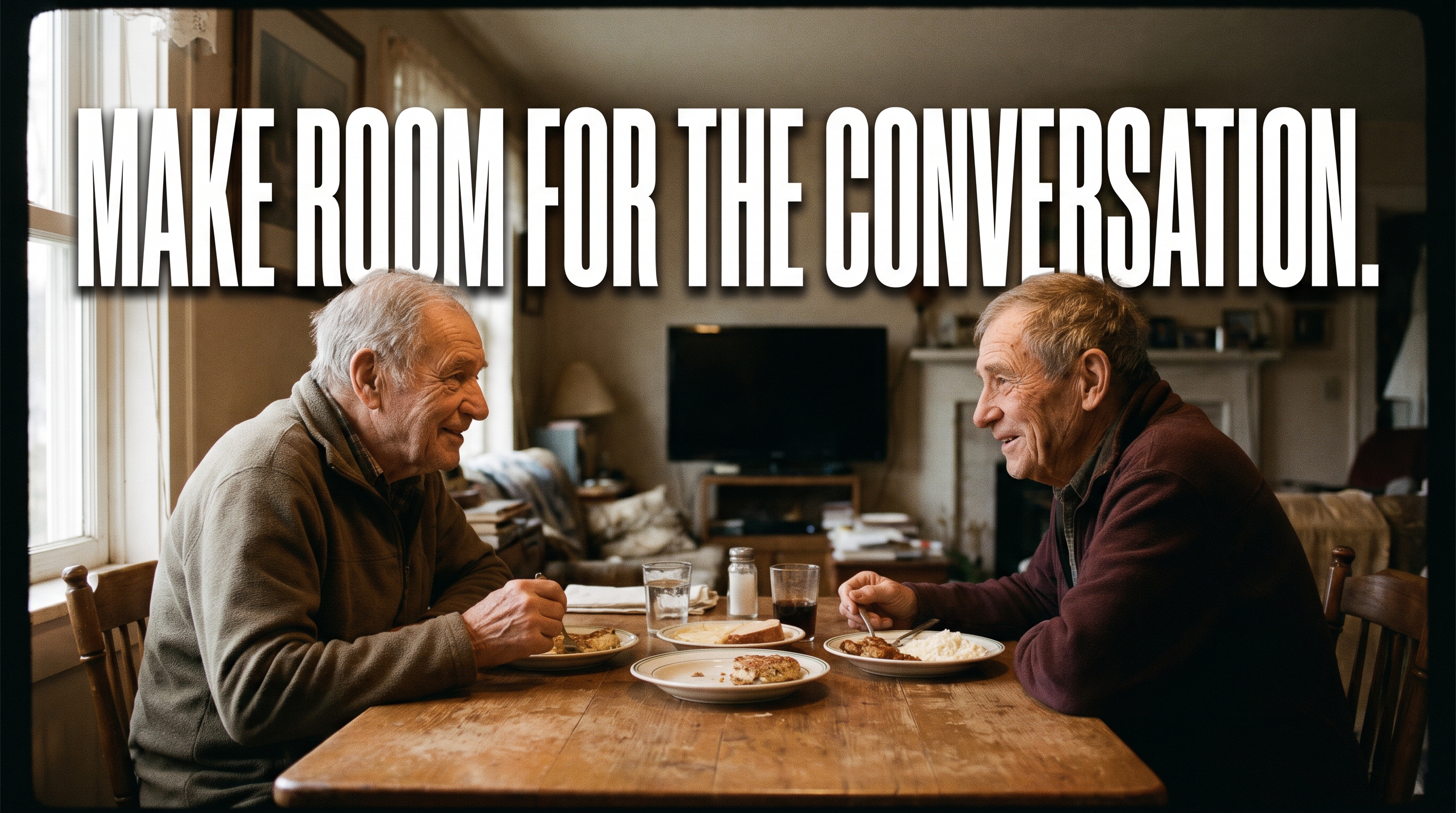
Everyone is talking. The television is still on. Someone at the far end of the table smiles, but has missed half the story.
Before asking that person to try harder, look at the room.
SPONSORED · 4 FOOT FARM BLUEPRINT
What fresh extra would you enjoy adding to the table?
Start with one food you already eat. The COMPLETE 4 Foot Farm Blueprint shows small-space and indoor growing options with pictures. Explore the Modern Victory Garden and choose a manageable project for your own home.
| TAP Here for the COMPLETE Blueprint → |
Tonight’s Install
One useful change for the home you already have. Print the worksheet below and add it to your Household Resilience Network binder.
ACTION BRIEF
Time: 10 minutes
Do: Set two seats for a face-to-face conversation with less background noise.
Win: both people can see each other, and a TV or other avoidable noise is off.
What’s happening now?
Thanksgiving is three weeks from today, on November 26. As households start making plans, include the conversation setup along with the menu. The National Institute on Aging recommends a quiet place to talk, facing the person, and including people with hearing loss in group conversation.
You can try those changes at an ordinary meal first.
What changed when access became part of the school?
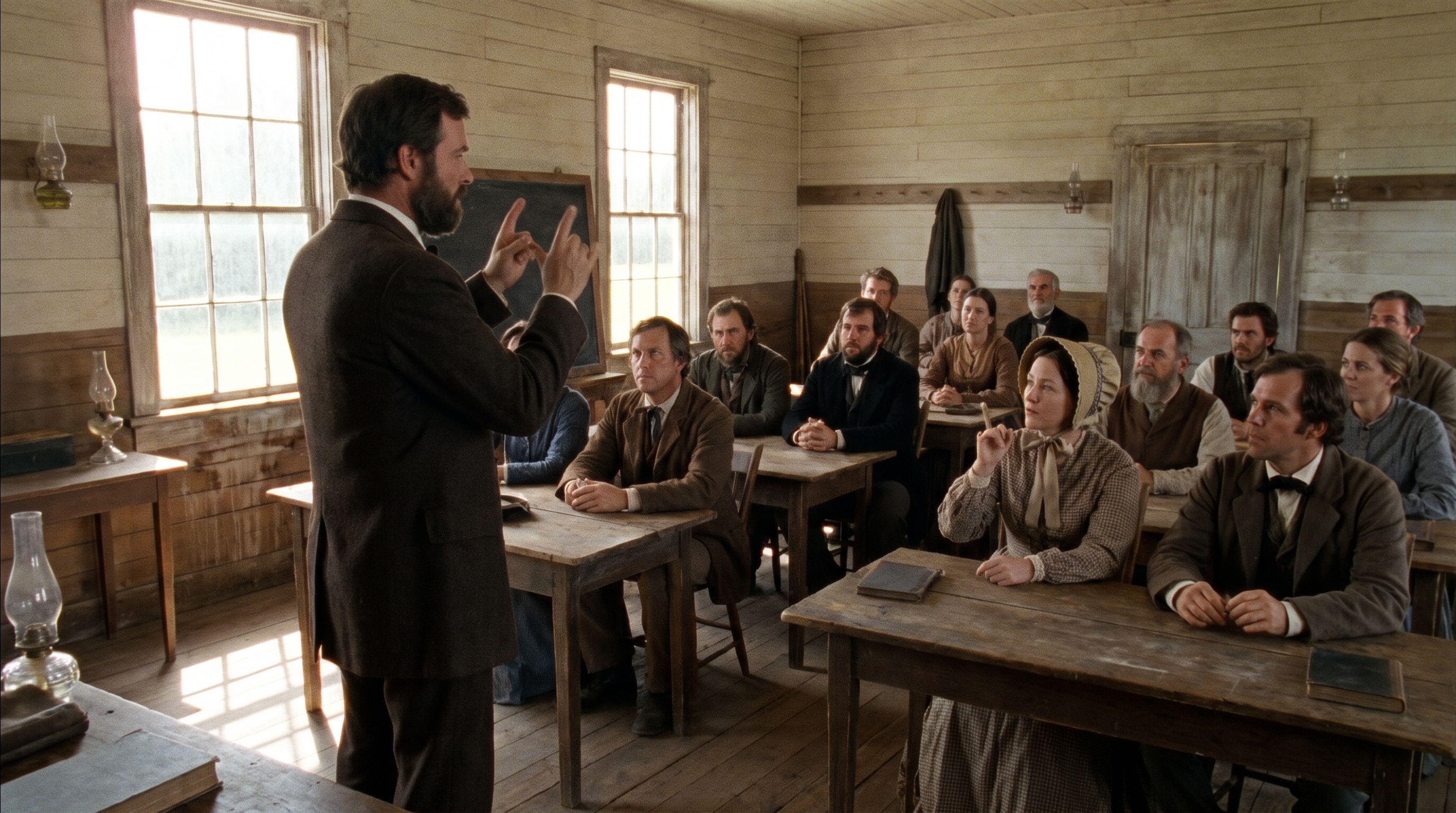
Illustrative historical reconstruction.
On April 8, 1864, President Abraham Lincoln signed a law allowing a Washington institution for Deaf students to grant college degrees. The college later became known as Gallaudet. The country was still in the Civil War.
The decision recognized that students should have access to higher learning. Hearing speech was not the only route to a classroom, a degree, or a serious exchange of ideas. A community could build communication around the people taking part.
Gallaudet’s museum traces that history through the institution’s changing names and work. Today, the university uses American Sign Language and English. Its story is about language, education, opportunity, and Deaf culture—not a simple medical tale about ears.
That distinction matters at a family table, too. People communicate in different ways. Some want a clearer view of faces.
Some use hearing devices, signs, captions, or other tools. The useful first question is what helps the person you are with.
An ordinary dinner is not a college, and moving a chair is not the same as opening educational access. The scale and purpose are very different.
The narrow household lesson is to change the setting rather than making the person carry every difficulty alone. You can turn off background television. You can stop speaking from another room.
You can make space for one person to finish.
Ask before deciding what someone needs. A helpful arrangement is one that works for them, not one that merely looks thoughtful to the host.
The history invites a practical question for tonight: have we made the conversation easier to join? That question belongs beside the guest list and the menu.
What did a row of stone seats do to sound?
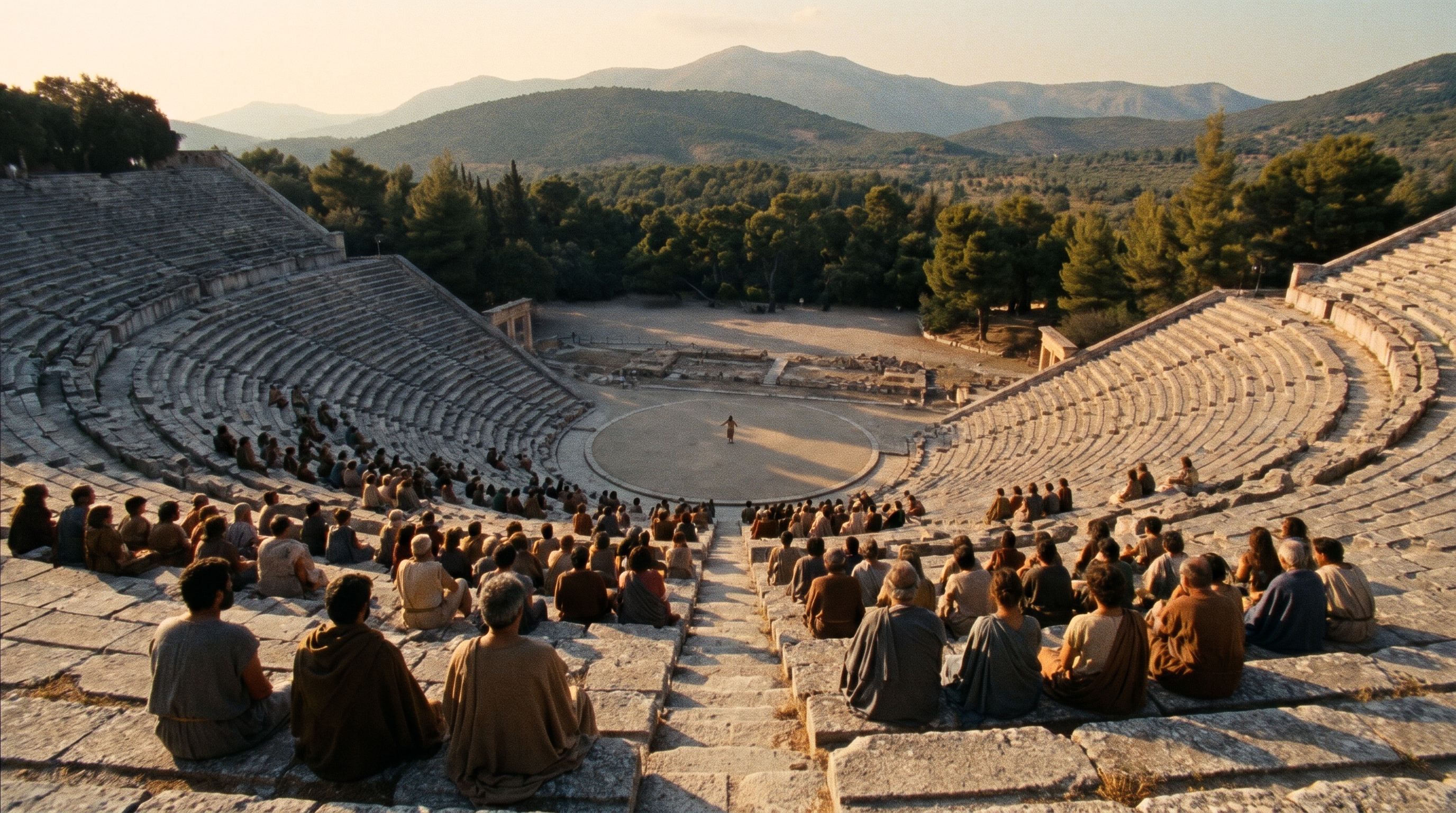
Illustrative historical reconstruction.
At Epidaurus in Greece, a theater built in the fourth century BC became famous for its acoustics. Its curved rows of stone seats rise up a slope. The shape of the place is part of the experience of hearing a performance.
In 2007, researchers working at Georgia Tech reported a model of how the seat rows affect sound. Their work suggested that the limestone seating helps filter lower-frequency background noise while favoring parts of the performer’s sound.
The finding was about a particular structure. It did not mean every ancient theater worked the same way, or that every listener could hear every word. Materials, geometry, location, and real background noise all matter.
It also does not turn your dining room into a Greek theater. You do not need stone benches, and the study is not a treatment for hearing loss.
The useful comparison is much smaller: surroundings change what reaches a listener. We often focus only on the person speaking or the person trying to hear. The room can add another difficulty.
A television behind the table may compete with a story. Dishes being cleared can interrupt a quiet voice. A speaker turned away from the group removes useful visual cues.
You cannot control every sound during a family meal. You can remove one avoidable source and make the next exchange easier to follow.
Try that before the holiday crowd arrives. Turn off the television, face the other person, and ask whether the arrangement helps. If it does not, ask what would.
The ancient theater gives us a better question than “Why aren’t you listening?” Ask instead: what is the space doing to the conversation, and which part can we improve?
SPONSORED · Audifort
“What was that?” For the third time.
You caught the start of the story. Missed the last few words. Why pair grape seed and green tea in a daily hearing-support blend?
Take a look at the ingredients behind it.
| TAP Here to See the Hearing Blend → |
THE PATTERN TO KEEP
Across BOTH examples, people gained access when the setting supported communication, rather than leaving every obstacle to the listener.
What can I do tonight?
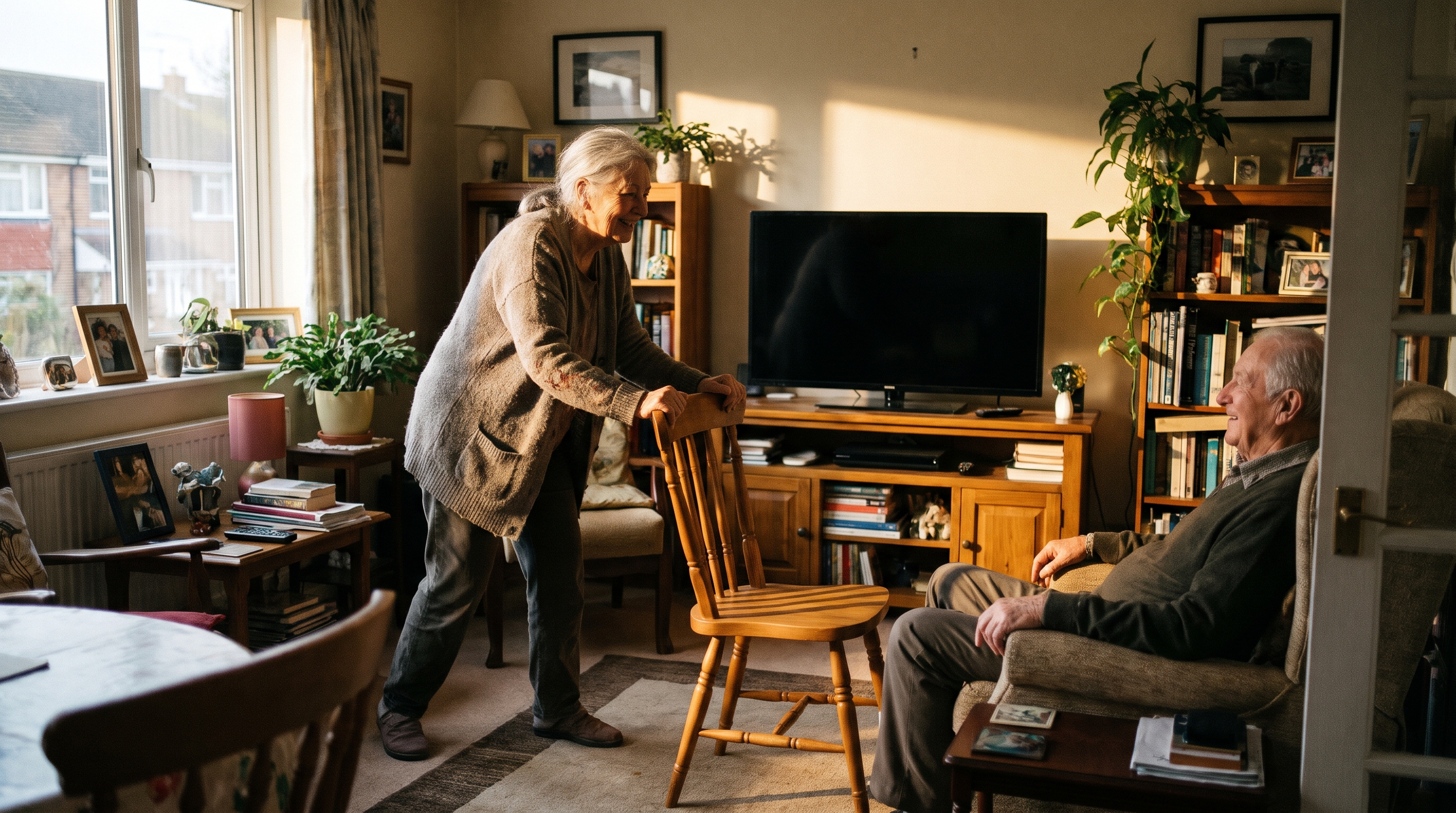
Choose two seats with a clear view of each other and light on faces. Turn off the television or another avoidable sound. Ask the other person what setup works best.
Speak clearly, take turns, and avoid calling from another room. Test it at tonight’s meal. Keep paths clear when moving furniture.
HOUSEHOLD RESILIENCE NETWORK · BINDER WORKSHEET
Make the Table Easier to Follow
Date: __________________
Two seats or places to use
Noise source we can remove
What the other person says helps
Change to keep for the holiday
Status Check
Win: both people can see each other, and a TV or other avoidable noise is off.
SPONSORED · 4Patriots
What could you keep running in a blackout?
Your phone is fading. The fridge has gone quiet. A rechargeable power station gives chosen devices another source of power. Could this one cover the essentials you would miss first?
The takeaway
Set two seats for a face-to-face conversation with less background noise. Keep the change small enough to finish, and leave a record you can check again.
Stay steady,
James Williamson
Freedom Health Daily
Simple steps for everyday health.
P.S. What makes family conversation hardest to follow: background TV, several voices, or distance? Hit reply with the biggest one. Forward this to the person hosting this year.
One more useful read: Find out where the stove fan sends the air →
P.P.S. · 4 FOOT FARM BLUEPRINT
Start with one food your household already eats. See the $7 Black Friday Blueprint offer →
NIA: hearing and conversation
NIDCD: the setting and communication
Gallaudet: April 8, 1864
Gallaudet: institutional history
Georgia Tech research announcement
UNESCO: ancient Greek theaters
Images are illustrative reconstructions, not archival photographs.